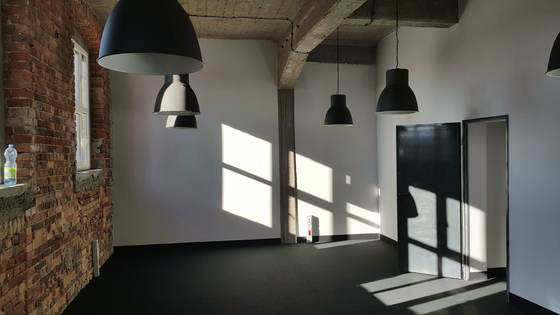
The palette
#B9B5AE
#7A5F48
#2E2E30
#8A4B32
#6B6560
These are the actual values, not an impression of them — take them to a paint supplier and have them matched.
What it actually is
Industrial interiors came from converted factories and warehouses in cities where that space was cheap. The aesthetic was a consequence rather than a choice: nobody plastered the brick because plastering an acre of brick was expensive, and the ducts stayed visible because boxing them in was not worth it.
That matters for anyone copying it, because the style's credibility rests on things being genuinely what they appear to be. A real concrete wall and a printed concrete wallpaper produce very different rooms even at a glance.
The one thing that decides whether it works
Honesty about what you actually have. Most homes have no exposed structure worth revealing, and the right response is to build the look from real materials rather than to simulate it from fake ones.
Microcement is a real surface. Black steel is real steel. Reclaimed board has real wear. All of those are legitimate, and all of them will outlast brick-effect wallpaper by a couple of decades.
The materials
Get these right and the colours matter less than you think. Get them wrong and no paint colour rescues the room.
- Concrete, or something that reads as it
- A poured floor or a genuinely exposed wall if you have one. If you do not, microcement over a prepared substrate gives the same surface at a few millimetres thickness, and is the honest way to fake it.
- Blackened or raw steel
- Window frames, shelf brackets, stair balustrades, door furniture. Matt black powder coat is the practical version; real blackened steel patinates and is better.
- Reclaimed or dark timber
- Scaffold board, old oak, anything with wear in it. New timber stained dark is not the same thing and generally looks it, because the marks are what you are buying.
- Leather, aged
- Tan or oxblood, on a sofa or a chair. This is where almost all the warmth in the scheme comes from, so do not skip it.
- Exposed services
- Conduit, ductwork, a visible pipe run. Only where they are genuinely there and genuinely safe to leave exposed — decorative fake conduit is the single most obvious tell.
Techniques that produce the look
- Pick one raw surface and commit
- One concrete or brick wall, properly done, beats four surfaces half-treated. Industrial is about a small number of large gestures.
- Seal anything porous
- Concrete, brick and raw plaster all shed dust and stain. A matt penetrating sealer keeps the look and makes the room liveable, which untreated surfaces are not.
- Warm it deliberately
- Leather, wool, a large rug, warm lighting at 2700 K. Left alone the palette is cold and hard; every successful industrial room has something soft fighting back.
- Use the ceiling
- Height is the style's best asset. Exposed joists, a tall pendant, shelving that runs up rather than along.
- Keep the metal consistent
- One metal finish across the whole room. Black steel and brushed brass in the same space reads as indecision, not as layering.
What takes the look apart
- Decorative fake conduit, fake rivets, and brick-effect wallpaper. All of them are visible from across the room.
- Leaving every surface hard. Without textiles the room is loud, cold and unpleasant to be in.
- Cool-white lighting, which turns concrete grey and corpse-like.
- Mixing three metal finishes.
- Exposing services that are not safe or compliant to leave exposed, which is a question for a qualified trade and not a styling decision.
Common questions
- Can I do industrial style in a normal house?
- Yes, but you are building the look rather than revealing it, and it is worth being honest with yourself about that. Microcement on walls, black steel frames and a reclaimed timber floor get you there. What does not work is pretending — fake brick and decorative conduit read as costume.
- Is microcement a good idea?
- It gives a genuine seamless concrete-like surface at a few millimetres, so it works over existing substrates without the weight or the build-up. It is specialist application though, and the result depends almost entirely on who applies it — this is not a first-time DIY finish.
- How do I stop it feeling cold?
- Leather, wool, a large rug, timber, plants, and warm light at 2700 K or below. The palette is hard by design, so the warmth has to be added on purpose rather than hoped for.
- What lighting suits it?
- Visible fittings with a metal shade, filament-style lamps, and task lighting on an arm. Avoid recessed downlights as the only source — they flatten the texture that the whole style depends on.