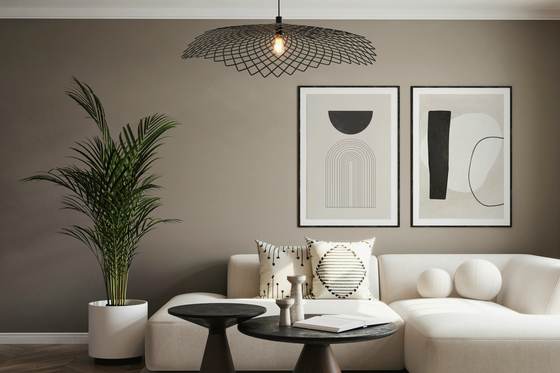
The palette
#E5E4E0
#F6F5F2
#D4C3A6
#3B3C3C
#232423
These are the actual values, not an impression of them — take them to a paint supplier and have them matched.
What it actually is
Contemporary is the only style on this site without a date, because the word means current. It is defined by what is being built and specified now: clean lines, open plans, large-format materials, concealed detailing and very little ornament.
That makes it slippery to pin down and easy to get wrong, because there is no historical reference to check yourself against.
The one thing that decides whether it works
Warmth and layered light.
Contemporary gets a bad reputation from a decade of grey boxes lit by a grid of downlights. Both of those are choices, not requirements.
Shift the neutrals to the warm side, put real timber and real textile in, and plan the lighting in layers — something concealed, something directional, something decorative, on separate switches. The same clean lines in warm materials under good light read as calm and expensive. In cool grey under a downlight grid they read as a dentist's waiting room.
The materials
Get these right and the colours matter less than you think. Get them wrong and no paint colour rescues the room.
- Large-format surfaces
- Big tiles, wide boards, long worktops, few joints. The visual quiet of a contemporary room comes largely from reducing the number of lines in it.
- Handleless, flush joinery
- Push-to-open or routed pulls, doors flush with their frames, skirtings shadow-gapped or omitted. Every removed line is the style working.
- Matt black metal
- Frames, taps, handles where they exist, lighting. One metal, used everywhere, in a flat finish.
- Engineered stone and composite
- Consistent, hard-wearing, low-maintenance surfaces. Contemporary is comfortable with manufactured material in a way that most other styles are not.
- One sculptural piece
- A pendant, a chair, a single artwork. In a room this quiet, one object with presence carries the whole composition.
Techniques that produce the look
- Remove lines
- Shadow gaps instead of skirting, flush doors, hidden fixings, concealed lighting. The craft of contemporary work is in what you cannot see, which is why it costs more than it looks.
- Keep the palette to three
- A pale neutral, a timber, and one dark. Any more and it stops reading as contemporary and starts reading as ordinary.
- Light from coves and spots, deliberately
- Layered lighting on separate circuits: concealed cove light, directional spots on art, one decorative pendant. Planned at first fix, not chosen afterwards.
- Let one piece be sculptural
- With everything else this quiet, one strong shape does enormous work. Usually the light fitting or the seating.
- Keep the floor continuous
- The same floor running through as much of the plan as possible, with no thresholds. It is the simplest way to make a space feel larger.
What takes the look apart
- Mistaking empty for designed. Contemporary is minimal but it is not unfurnished.
- Cool grey everywhere with no warm element, which is the grey-box failure of the 2010s.
- Visible fixings, mismatched trim, and anything that adds a line without a reason.
- Mixing metal finishes.
- Downlights as the only light source, which flattens every surface in the room.
Common questions
- What is the difference between contemporary and modern?
- Modern refers to a specific period — roughly the mid twentieth century modernist movement and its furniture. Contemporary means whatever is current, so it moves. A contemporary room from 2010 and one from today look noticeably different; a modern one does not.
- Will contemporary date?
- By definition, yes — that is what the word means. The way to limit it is to put the money into things that are period-neutral: good proportions, quality timber and stone, well-planned lighting. Then the replaceable layer is furniture and fittings.
- Why does contemporary often feel cold?
- Because it is usually done with a cool grey palette and a single layer of downlights. Both are fixable. Shift the neutrals warm, add timber and textile, and light the room with layers rather than a ceiling grid.
- Is handleless joinery worth it?
- Visually yes, it is the single biggest contributor to the look. Practically, push-to-open mechanisms wear and routed finger pulls mark where hands go. Budget for good hardware; the cheap versions of both fail within a few years.