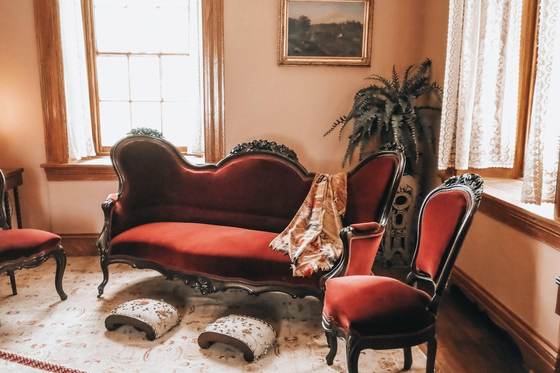
The palette
#D7A99A
#7B2F33
#5A2F23
#EFE6D8
#A8853F
These are the actual values, not an impression of them — take them to a paint supplier and have them matched.
What it actually is
Victorian covers roughly 1837 to 1901, and it was a period of industrial manufacturing meeting a taste for ornament. Mouldings, tiles, cast iron and patterned textiles all became mass-produced and therefore affordable, and people used a great deal of them.
What survives in these houses is the architecture: generous ceiling heights, deep skirtings, panelled doors, cornice, ceiling roses, cast iron fireplaces and tiled hallways. That is the real inheritance, and it is the part worth spending on.
The one thing that decides whether it works
What you keep.
A Victorian house that has had its cornice removed, its fireplaces blocked, its doors replaced with flush modern ones and its tiled hall carpeted over is just a house with high ceilings. Every one of those features is expensive and difficult to reinstate and cheap to keep.
So the first job in a Victorian renovation is an inventory of what is still there, and a decision to protect it before any other work starts. Decoration comes a long way after that.
The materials
Get these right and the colours matter less than you think. Get them wrong and no paint colour rescues the room.
- Ornamental plasterwork
- Cornice, ceiling rose, corbels. This is the single most valuable thing in a Victorian room and the most commonly destroyed. Restoration is specialist work and worth paying for.
- Dark hardwood joinery
- Mahogany, walnut, stained pine. Deep skirtings, panelled doors, picture rails, a substantial staircase.
- Encaustic and geometric tile
- Hallway floors, hearths, porches. Patterned, hard-wearing, and a defining Victorian signature.
- Heavy textiles
- Velvet, damask, brocade, fringed. The Victorians layered fabric heavily and the period rooms that read as authentic still do.
- Cast iron
- Fireplaces, radiators, balusters, window furniture. Usually painted black, and usually worth restoring rather than replacing.
Techniques that produce the look
- Restore before you decorate
- Cornice, fireplaces, doors, floors, tiles. Period detail is the asset and most Victorian houses have lost some of it. Putting it back is the highest-value work in the house, including at resale.
- Use the horizontal divisions
- Picture rail, dado, skirting. The Victorians treated the wall as three bands and often coloured them differently. Using those divisions is what makes a room read as period rather than as a modern room with a cornice.
- Go deeper than feels comfortable
- Period colours were far more saturated than modern taste expects — deep greens, dusty pinks, ochres, dark reds. A timid version looks like a modern room with mouldings.
- Keep the ceiling light
- Cream or off-white above the picture rail, including the cornice. That lift is what keeps a dark Victorian room from closing in.
- Edit the clutter
- Authentic Victorian interiors were extremely full. The liveable modern version keeps the architecture and the colour and takes out about half the objects.
What takes the look apart
- Stripping out period detail. It is irreplaceable, it is why the house is worth what it is, and modern replacements rarely match.
- Brilliant white everything, which flattens the plasterwork it is meant to show off.
- Modern flat skirting and plain doors in a period room.
- Downlights in a period ceiling, which is both visually and often structurally the wrong answer.
- Full historical accuracy in a house you live in, unless that is genuinely the project.
Common questions
- Should I restore original features or modernise?
- Restore the architecture, modernise the services and the plan. Cornice, fireplaces, doors, floors and tiles are the asset and should stay. Wiring, heating, insulation and how the rooms connect are where a Victorian house genuinely needs bringing forward.
- Can I mix modern furniture into a Victorian room?
- It is usually the best answer, and it is essentially what transitional style is. Strong period architecture carries plain modern furniture very well, and a fully period-furnished room is hard to actually live in.
- What about damp and cold?
- The most common real problems in these houses, and they interact with how the building was designed to breathe. Solid walls, lime mortar and original ventilation behave differently from modern construction, and the wrong insulation or the wrong sealant can make things worse. This is a question for someone who specialises in period buildings.
- Are the original colours really that dark?
- Darker and more saturated than most people expect, yes — deep greens, dark reds, ochres and strong pinks were all normal. Several paint manufacturers publish researched historic ranges, which is the easiest way to get the tone right.