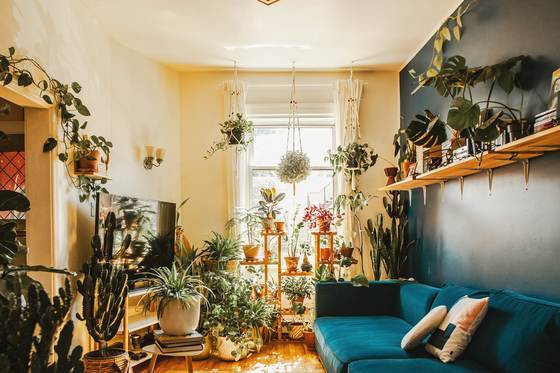
The palette
#EFEDE6
#4D6B4A
#B5714F
#C2A67C
#2C5155
These are the actual values, not an impression of them — take them to a paint supplier and have them matched.
What it actually is
Biophilic design starts from a straightforward observation: people tend to feel better in spaces with daylight, planting, natural materials and views of something living. It is used seriously in hospitals, offices and schools, where the effects are measured.
In a home it means treating planting and natural material as part of the plan rather than as the last thing you add. Where the light falls, what you touch, what you can see out of the window — those are the design decisions.
The one thing that decides whether it works
Light first, plants second.
The commonest failure is buying plants you like and finding places for them. Six weeks later most of them are dying, and a room of struggling plants is worse than none.
Work the other way. Spend a day noticing which parts of the room get direct sun, which get bright indirect light and which get almost nothing. Then choose plants for those positions. The style depends on the planting thriving, and thriving is a light question before it is anything else.
The materials
Get these right and the colours matter less than you think. Get them wrong and no paint colour rescues the room.
- Living plants, as mass
- Not a plant on a shelf — groups, at three or four different heights, in enough quantity to change the air and the acoustics of the room. This is the structural material of the style.
- Unsealed natural timber
- Oiled rather than lacquered, so the grain can be felt. Touch matters here: a sealed plastic-feeling surface breaks the effect even when it looks like wood.
- Terracotta and stoneware pots
- Unglazed clay in mixed sizes. It breathes, which plants prefer, and it ages, which the style prefers.
- Natural fibre
- Jute, sisal, wool, linen. The tactile floor and textile layer that stops a green room feeling like an office atrium.
- Stone and water, if possible
- A stone surface, a pebble tray, anything that reads as a natural process rather than a manufactured one.
Techniques that produce the look
- Plant in groups at three heights
- Floor, mid and hanging or shelf level. A single plant is decoration; three heights reads as planting and genuinely changes how enclosed a room feels.
- Start from the daylight, not the plant list
- Map which parts of the room get what light through the day, then choose plants for those positions. Buying plants first and finding somewhere for them is why most indoor planting fails.
- Use natural materials people touch
- Oiled timber on the surfaces hands land on, wool underfoot, stone where you set things down. Biophilia is a tactile idea as much as a visual one.
- Frame a view, if you have one
- Keep window dressing minimal and arrange seating towards the glass. A view of a tree does more than any amount of indoor planting.
- Make watering easy or it will not happen
- Pots you can actually lift, a tap within reach, grouped plants with similar needs. The design decision that determines whether the room looks like this in a year.
What takes the look apart
- Artificial plants. In a style whose whole premise is living material, they are visible and self-defeating.
- One plant per corner, which is decoration rather than planting.
- Buying plants before understanding the light, which is why most of them die.
- Matching pots in a row, which reads as a garden centre display.
- Green paint instead of green plants. The colour is not the point; the living material is.
Common questions
- What is biophilic design, exactly?
- A design approach based on the idea that people respond well to contact with natural systems — daylight, planting, natural materials, views, natural variation. In an interior it means designing those in from the start rather than adding plants at the end.
- How many plants is enough?
- Enough that removing them would change the room. In practice that usually means groups rather than singles, at several heights, with at least one large specimen. The test is whether the planting reads as part of the room's structure.
- What if the room is dark?
- Choose for the light you have rather than fighting it — there are plants that tolerate low light well, and a garden centre or any plant reference will list them. Also use the other half of the style: timber, stone, natural fibre and a framed view all work without daylight.
- Does it only work in modern rooms?
- No. Victorian interiors were full of plants, and a period room with a large fern and heavy timber reads perfectly well. The approach is about materials and living things, not about a particular architectural age.